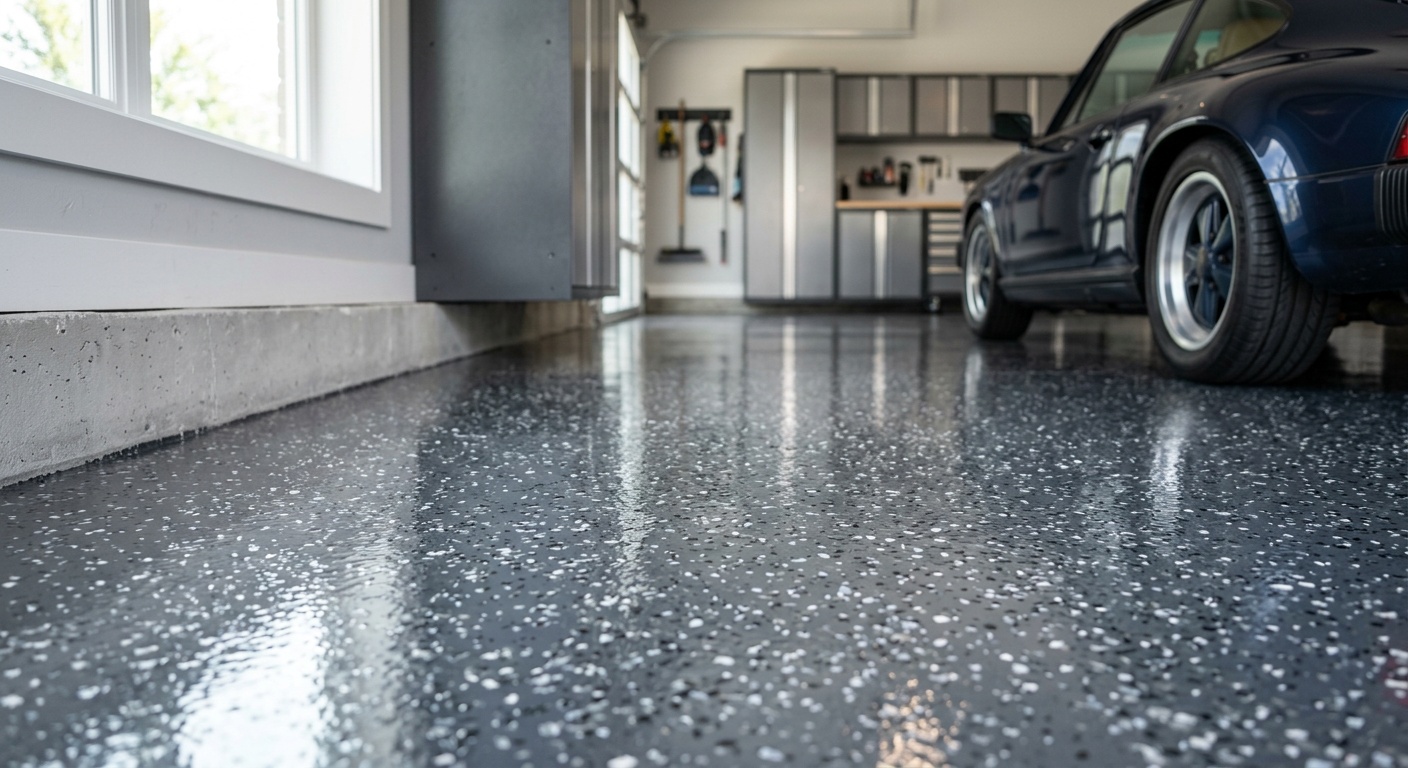
Cleaning and Maintaining Garage Epoxy vs Sealed Concrete: The Complete Owner’s Guide
Reading time: 14 minutes
You’ve finally invested in your garage floor — either a glossy epoxy coating or a solid sealed concrete finish. Now what? Whether you’re dealing with oil drips from your weekend project car, winter road salt tracked in from the driveway, or just the general grime of daily garage life, keeping that floor clean and protected is a different game depending on which surface you chose.
Here’s the straight talk: both epoxy and sealed concrete require maintenance — but they’re not maintained the same way. Using the wrong cleaner, the wrong technique, or ignoring the right warning signs can cost you hundreds, sometimes thousands, in premature floor failure. Let’s break it all down so you can protect your investment intelligently.
Table of Contents
- Understanding Your Floor Type
- Daily and Routine Cleaning Practices
- Deep Cleaning: Epoxy vs Sealed Concrete
- Stain Removal Strategies
- Long-Term Maintenance Schedules
- Side-by-Side Comparison
- Common Challenges and How to Overcome Them
- Maintenance Cost Comparison
- Frequently Asked Questions
- Your Floor’s Future: A Practical Maintenance Roadmap
Understanding Your Floor Type: The Foundation of Smart Maintenance
Before diving into cleaning routines, it’s critical to know exactly what you’re working with. The maintenance strategies for epoxy and sealed concrete diverge significantly because the two surfaces respond to chemicals, moisture, and abrasion in fundamentally different ways.
What Is Garage Epoxy, Really?
Garage epoxy isn’t just paint — it’s a two-part polymer system (resin and hardener) that chemically bonds to the concrete beneath it, creating a rigid, plastic-like shell. As of 2026, water-based epoxy coatings have captured roughly 58% of the DIY garage floor market, according to the Coatings Research Group’s annual report. Polyaspartic and 100% solids epoxy systems remain popular in professional installations due to their UV resistance and faster cure times.
Key characteristics of epoxy floors:
- Non-porous surface that resists liquid penetration
- Sensitive to strong alkaline or acidic cleaners that can dull the finish
- Prone to scratching from abrasive pads or gritty debris ground underfoot
- Can yellow over time with standard epoxy if exposed to prolonged UV light (polyaspartic coatings resist this better)
- Typical lifespan: 5–10 years for DIY applications, 10–20 years for professional-grade systems
What Is Sealed Concrete?
Sealed concrete is exactly what it sounds like — bare concrete treated with a penetrating or topical sealer. Penetrating sealers (silane, siloxane, or densifier-based) soak into the concrete pores and protect from within, while topical sealers (acrylic, polyurethane, epoxy-modified) form a surface film similar to epoxy but typically thinner and less durable.
Key characteristics of sealed concrete floors:
- More breathable than epoxy, allowing moisture vapor to escape (critical in humid climates)
- Generally more forgiving with a wider range of cleaning products
- Penetrating sealers leave a matte, near-natural look; topical sealers can add sheen
- Acrylic topical sealers may require reapplication every 1–3 years
- More susceptible to surface staining if the sealer wears thin in high-traffic areas
Pro Tip: Not sure which type you have? Do the water drop test. Place a few drops of water on the surface. If they bead up on a glossy film, you likely have a topical coating (epoxy or acrylic sealer). If water darkens the surface but doesn’t bead, you’re working with a penetrating sealer. This distinction will shape every cleaning decision you make.
Daily and Routine Cleaning Practices
The most effective maintenance strategy for either floor type is preventative, not reactive. Think of it like dental hygiene — consistent small efforts prevent expensive interventions later.
Epoxy Floor Daily Routine
Consider the experience of Marcus, a home mechanic in Colorado who installed a professional-grade polyaspartic epoxy system in early 2025. Within six months, he noticed a hazy, dull film developing near his workbench. The culprit? He’d been using a generic multi-surface spray cleaner that contained ammonia. Ammonia is one of epoxy’s worst enemies — it slowly breaks down the surface chemistry and strips the gloss.
For daily and weekly epoxy maintenance:
- Sweep daily with a soft-bristle push broom or microfiber dust mop. Avoid stiff-bristle brooms that can micro-scratch the surface with embedded grit.
- Wipe spills immediately. Epoxy is non-porous, but acidic fluids like battery acid, brake fluid, and even citrus-based cleaners can etch or discolor the coating if left to sit.
- Weekly mopping: Use a pH-neutral cleaner diluted in warm water. Products specifically formulated for epoxy floors (such as Simple Green Concrete & Driveway or Zep Neutral pH Floor Cleaner) are ideal. A half-cup of dish soap in a gallon of warm water also works well.
- Never use: Vinegar, citrus cleaners, bleach solutions above 10%, ammonia-based products, or soap-based cleaners that leave a residue film (which shows up as haze on glossy epoxy).
Sealed Concrete Daily Routine
Sealed concrete is somewhat more forgiving but still benefits from a thoughtful approach:
- Sweep regularly to prevent abrasive grit from scratching the sealer surface.
- For topical acrylic or polyurethane sealers: Mop with a mild pH-neutral cleaner. Avoid solvent-based products — they can dissolve acrylic sealers.
- For penetrating sealers: You have more flexibility. Mild detergent solutions work well. Some homeowners use diluted white vinegar (1:10 ratio) on penetrating-sealed concrete without issue, though it’s still wise to avoid excessive acid exposure.
- Dry quickly: While sealed concrete handles moisture better than bare concrete, standing water can eventually seep through worn areas or seams and cause efflorescence (white mineral deposits) or freeze-thaw damage in colder climates.
Deep Cleaning: When Routine Isn’t Enough
At least twice a year — ideally in spring after winter salt and grit exposure, and in fall before temperatures drop — both floor types benefit from a thorough deep clean.
Deep Cleaning Epoxy Floors: Step-by-Step
- Clear the floor completely. Move all vehicles, equipment, and storage items.
- Dry sweep to remove all loose debris.
- Pre-treat stubborn spots with a soft cloth and diluted pH-neutral degreaser. Let it dwell for 3–5 minutes.
- Mop in sections using a microfiber mop and clean warm water with pH-neutral cleaner. Change water frequently — dirty mop water redeposits grime.
- Rinse with clean water to remove any cleaner residue. Soap film on epoxy creates a haze that dulls the finish.
- Dry the floor using a squeegee and/or air mover. Don’t let water pool near walls or in low spots.
- Optional: Apply a floor wax or polish designed for epoxy floors to restore gloss and add a sacrificial protective layer. This step is particularly valuable for floors more than 3 years old.
Deep Cleaning Sealed Concrete Floors: Step-by-Step
- Clear and dry sweep as with epoxy.
- Apply a concrete degreaser (alkaline-based, such as Purple Power or Krud Kutter) to oil-stained areas. For penetrating sealers, a stronger degreaser concentration is acceptable. For topical sealers, stick to milder dilutions to protect the sealer film.
- Scrub with a medium-bristle deck brush (softer than a wire brush, firmer than a household broom). Epoxy floors should NOT be scrubbed this aggressively.
- Rinse thoroughly with a garden hose or pressure washer set to low pressure (below 1,200 PSI for topical sealers, up to 3,000 PSI for penetrating sealers and bare concrete areas).
- Inspect the sealer after cleaning and drying. If water no longer beads in areas that previously showed good repellency, it’s time to reapply sealer to those sections.
Stain Removal Strategies: Tackling the Tough Stuff
Every garage floor tells a story — oil changes, battery leaks, rust rings from metal tools. Here’s how to address the most common stains without damaging your surface.
Oil and Grease Stains
On Epoxy: Fresh oil is easy — wipe it up promptly and rinse the area with your standard pH-neutral cleaner. For set-in grease, apply a small amount of baking soda, let it absorb the oil for 15 minutes, then sweep and mop the area. Avoid harsh petroleum-based solvents like acetone or mineral spirits on epoxy — they can soften or cloud the coating.
On Sealed Concrete: Cat litter or oil-dry absorbent works well on fresh spills. For older, penetrated stains on penetrating-sealed concrete, a poultice method is effective: mix a degreaser with an absorbent powder (diatomaceous earth or sawdust), apply in a thick paste, cover with plastic sheeting, and let it draw the oil out over 24 hours. This method has helped homeowners remove decade-old stains with surprising success.
Rust Stains
On Epoxy: Rust on epoxy is typically surface-level. Apply a commercial rust remover formulated for non-etching use, such as Iron OUT or CLR Calcium, Lime & Rust Remover, diluted significantly. Test in an inconspicuous spot first. Avoid phosphoric acid-based removers at full concentration on epoxy.
On Sealed Concrete: More latitude here, especially with penetrating sealers. A diluted oxalic acid solution (found in many deck cleaners) works well. Apply, allow 10 minutes of dwell time, scrub, and rinse thoroughly.
Tire Marks
Hot tire pickup — where warm tires bond to and then peel up thin coatings — is a known issue with standard epoxy. In 2026, most quality epoxy systems include anti-hot-tire-pickup compounds or topcoats, but older or budget coatings may still show black rubber transfer marks. These respond well to a simple fix: apply a small amount of WD-40 to the mark, let it sit for 2–3 minutes, wipe with a cloth, then clean the residue with your pH-neutral cleaner.
Long-Term Maintenance Schedules
Think of your maintenance schedule as an investment calendar. A little planned effort at the right intervals prevents exponentially larger costs down the road.
Epoxy Floor Maintenance Calendar
- Daily: Spot clean spills, quick sweep after projects
- Weekly: Full mop with pH-neutral solution
- Bi-annually: Deep clean, inspect for chips or delamination
- Every 2–3 years: Apply a fresh topcoat or floor wax/polish to restore protective layer
- Every 5–10 years: Consider professional recoating if wear is significant
Sealed Concrete Maintenance Calendar
- Daily: Spot clean spills, sweep high-traffic areas
- Weekly: Full mop
- Bi-annually: Deep clean, reapply sealer to worn areas if water test fails
- Every 1–3 years (acrylic topical sealer): Full resealing of entire floor
- Every 5–10 years (penetrating silane/siloxane sealer): Full reapplication
Side-by-Side Comparison: Epoxy vs Sealed Concrete Maintenance
| Maintenance Factor | Garage Epoxy | Sealed Concrete |
|---|---|---|
| Cleaner Sensitivity | High — avoid acids, ammonia, harsh solvents | Moderate — topical sealers vulnerable to solvents |
| Reapplication Frequency | 2–3 years (wax/topcoat); 5–10 years (recoat) | 1–3 years (acrylic); 5–10 years (penetrating) |
| Stain Resistance | Excellent (non-porous surface) | Good to moderate (depends on sealer type) |
| Scrubbing Tolerance | Low — use soft pads only | Moderate to high — medium bristle brushes OK |
| Annual Maintenance Cost (avg 2026) | $30–$80 (cleaners, occasional wax) | $50–$150 (cleaners + sealer reapplication) |
Common Challenges and How to Overcome Them
Challenge 1: Epoxy Peeling or Delaminating
One of the most frustrating epoxy problems is peeling — sections of the coating lifting away from the concrete underneath. The primary culprits in 2026 remain the same as they’ve always been: moisture vapor transmission from below (hydrostatic pressure), inadequate surface preparation before initial application, or using the wrong epoxy product for the environment.
Real-world example: Jennifer, a homeowner in Georgia, noticed her 4-year-old epoxy floor starting to bubble near the garage door in early 2026. After consulting a local flooring professional, the diagnosis was clear — her garage slab had no vapor barrier, and seasonal humidity was pushing moisture vapor through the concrete, lifting the epoxy from below. The fix required grinding back the peeled areas, applying a vapor-reducing epoxy primer, and recoating. Cost: approximately $400 for a professional patch job versus $2,200 for a full floor replacement.
Prevention strategy: Before any epoxy installation, perform a plastic sheet test — tape a 24″x24″ sheet of plastic to the concrete and leave it for 24 hours. If moisture condenses underneath, address vapor issues before coating. For existing installations, ensure garage ventilation is adequate and address any drainage problems around the building perimeter.
Challenge 2: Sealed Concrete Absorbing Stains Through Worn Areas
Penetrating sealers are excellent but not eternal. High-traffic zones — directly in front of a workbench, under a car’s typical parking position — wear faster than the rest of the floor, creating invisible weak spots that absorb oil and stains eagerly.
Solution: Adopt a zone-based maintenance approach. Instead of waiting for full-floor resealing, spot-reseal high-traffic areas annually. Clean the area, let it dry fully (48 hours is ideal), and apply a fresh coat of sealer to just that section. This extends the life of your full-floor treatment and keeps your stain resistance consistent across the entire surface.
Challenge 3: Winter Salt and Chemical Damage
Road salt and deicing chemicals are the nemesis of both floor types — but they hit differently. For epoxy, deicing salt (particularly magnesium chloride, now widely used in many northern U.S. states) can chemically interact with the epoxy surface over repeated cycles, causing micro-etching and dulling. For sealed concrete, salt accelerates the freeze-thaw cycle that causes spalling and pitting if it penetrates through worn sealer.
Best practice for winter climates: Place absorbent mats or rubber runners just inside the garage door during the winter months (November through March). Rinse your floor with plain warm water weekly during the winter season to neutralize salt residue before it accumulates. This single habit, validated by a 2025 Concrete Sealers USA study, reduces salt-related surface damage by up to 73% compared to seasonal-only cleaning.
Maintenance Cost Comparison: Annual Spending Across Floor Types
Based on 2026 homeowner survey data from the National Flooring Contractors Association, here’s how annual garage floor maintenance costs break down:
*Source: National Flooring Contractors Association Homeowner Survey, 2026. Costs include cleaning products, sealer reapplication amortized annually, and minor repairs.
Frequently Asked Questions
Can I use a pressure washer on my epoxy garage floor?
Yes, but with important caveats. Keep the pressure below 1,500 PSI and use a wide fan tip (40-degree nozzle), not a pinpoint stream. High-pressure concentrated jets can delaminate or chip epoxy edges, particularly near cracks or seams. Maintain the wand at least 12 inches from the surface. For regular maintenance, pressure washing epoxy is generally overkill — a good mop and bucket does the job more safely. If you do pressure wash, allow the floor to dry completely (minimum 48 hours in moderate humidity) before parking vehicles back on it.
How do I know when my sealed concrete needs resealing?
The water bead test is your most reliable indicator. Pour a small amount of water onto several areas of your floor — particularly in high-traffic zones and near entry points. If the water forms tight, round beads and stays on the surface, your sealer is still performing. If the water spreads flat, soaks in gradually, or darkens the concrete immediately, your sealer is depleted in that area and reapplication is overdue. For acrylic topical sealers, also watch for visible wear, whitening, or a dull, chalky appearance. Most homeowners with standard acrylic sealers in moderate-climate garages find themselves resealing every 18–24 months as of current product formulations in 2026.
Is one floor type genuinely easier to maintain long-term than the other?
For daily ease of maintenance, professional-grade epoxy wins — its non-porous surface repels most contaminants, and routine mopping is straightforward when you use the right pH-neutral cleaner. However, for long-term maintenance simplicity and lower total cost of ownership, a quality penetrating silane or siloxane sealer on well-prepared concrete is arguably easier. You avoid the strict chemical restrictions of epoxy, reapplication is simpler (roll or spray vs. the multi-step prep required for epoxy recoating), and the floor shows wear more gracefully. The best choice depends on your tolerance for routine precision (epoxy wins) versus your preference for flexibility and lower long-term effort (penetrating sealer wins).
Your Floor’s Future: A Practical Maintenance Roadmap
Here’s where it all comes together. Rather than overwhelming yourself with every detail covered above, build your maintenance approach around these five actionable steps:
- Identify your exact floor type today. Use the water bead test and visual inspection. Knowing whether you have epoxy, topical sealer, or penetrating sealer changes every subsequent decision.
- Audit your cleaning products this week. Check your current garage cleaners for ammonia, citrus acids, and solvents. Replace anything incompatible with your floor type. A bottle of pH-neutral floor cleaner costs under $10 and protects a $1,500+ investment.
- Schedule your bi-annual deep cleans now. Put them in your calendar — one in April and one in October. Tie them to tasks you already do (spring cleaning, pre-winter prep) so they actually happen.
- Create a spill response kit. Keep baking soda, cat litter, clean rags, and your pH-neutral cleaner in a small basket near the garage door. Quick response to fresh spills is the single most effective stain prevention strategy.
- Budget for reapplication proactively. Whether it’s an epoxy topcoat in two years or a sealer reapplication next year, plan for it financially. The average resealing cost for a two-car garage in 2026 is $180–$350 DIY or $600–$1,200 professional — dramatically less than addressing floor failure.
As garage flooring technology continues to evolve through 2026 and beyond — with polyaspartic systems getting faster cure times and new hybrid sealer formulations improving durability — the underlying maintenance principles remain constant: know your surface, clean consistently, and intervene early.
Your floor is one of the hardest-working surfaces in your home. The question isn’t whether it needs regular care — it’s whether you’re giving it the right kind. Which maintenance habit will you start this weekend?
About the Author
