How to Install Porcelain Tile Over Existing Concrete Slabs: The Complete 2026 Guide
Reading time: 14 minutes
Ever stared at a cracked, stained concrete slab and thought, “There has to be a better way to deal with this”? You’re not alone. Millions of homeowners and contractors in 2026 are choosing porcelain tile as their go-to solution for transforming dull, deteriorating concrete surfaces into stunning, durable floors and patios. But here’s the straight talk: installing porcelain tile over concrete isn’t just about slapping down some adhesive and calling it a day. Done incorrectly, you’ll be back to square one within a year — cracked tiles, hollow spots, and failed grout joints telling the sad story of a rushed job.
This guide cuts through the noise and walks you through the entire process with precision — from evaluating your slab’s condition to grouting the final joint. Whether you’re a determined DIYer tackling a basement floor or a contractor looking to sharpen your technique, we’ve got practical, actionable guidance built for the realities of 2026’s materials, products, and building standards.
Table of Contents
- Why Porcelain Tile Over Concrete in 2026?
- Step 1 — Assessing Your Concrete Slab
- Step 2 — Tools and Materials You’ll Need
- Step 3 — Surface Preparation: The Make-or-Break Phase
- Step 4 — Layout Planning and Dry-Fitting
- Step 5 — Mixing Mortar and Setting the Tile
- Step 6 — Grouting and Sealing
- Common Challenges and How to Overcome Them
- Product and Method Comparison Table
- Frequently Asked Questions
- Your Tile Transformation Roadmap: Final Steps
Why Porcelain Tile Over Concrete in 2026?
The tile industry has been booming. According to the Tile Council of North America (TCNA), the U.S. tile market hit $4.3 billion in 2025, with porcelain accounting for over 62% of all residential tile installations. And that growth continues into 2026, driven by advances in large-format tile manufacturing, improved thin-set formulations, and a surge in outdoor living projects post-pandemic.
Concrete slabs are everywhere — under garage floors, patios, basements, and sunrooms. They offer a structurally solid substrate, but they’re notoriously uninspiring. Porcelain tile brings:
- Durability: Porcelain absorbs less than 0.5% water, making it nearly impervious to moisture damage
- Design versatility: 2026’s digital printing technology produces tiles mimicking marble, wood, terrazzo, and even fabric textures
- Longevity: A properly installed porcelain floor can last 50+ years with minimal maintenance
- Value: Tile installations typically return 60–70% of their cost in home value, according to 2025 Remodeling Magazine data
- Low maintenance: Unlike hardwood or carpet, porcelain requires no waxing, refinishing, or deep cleaning
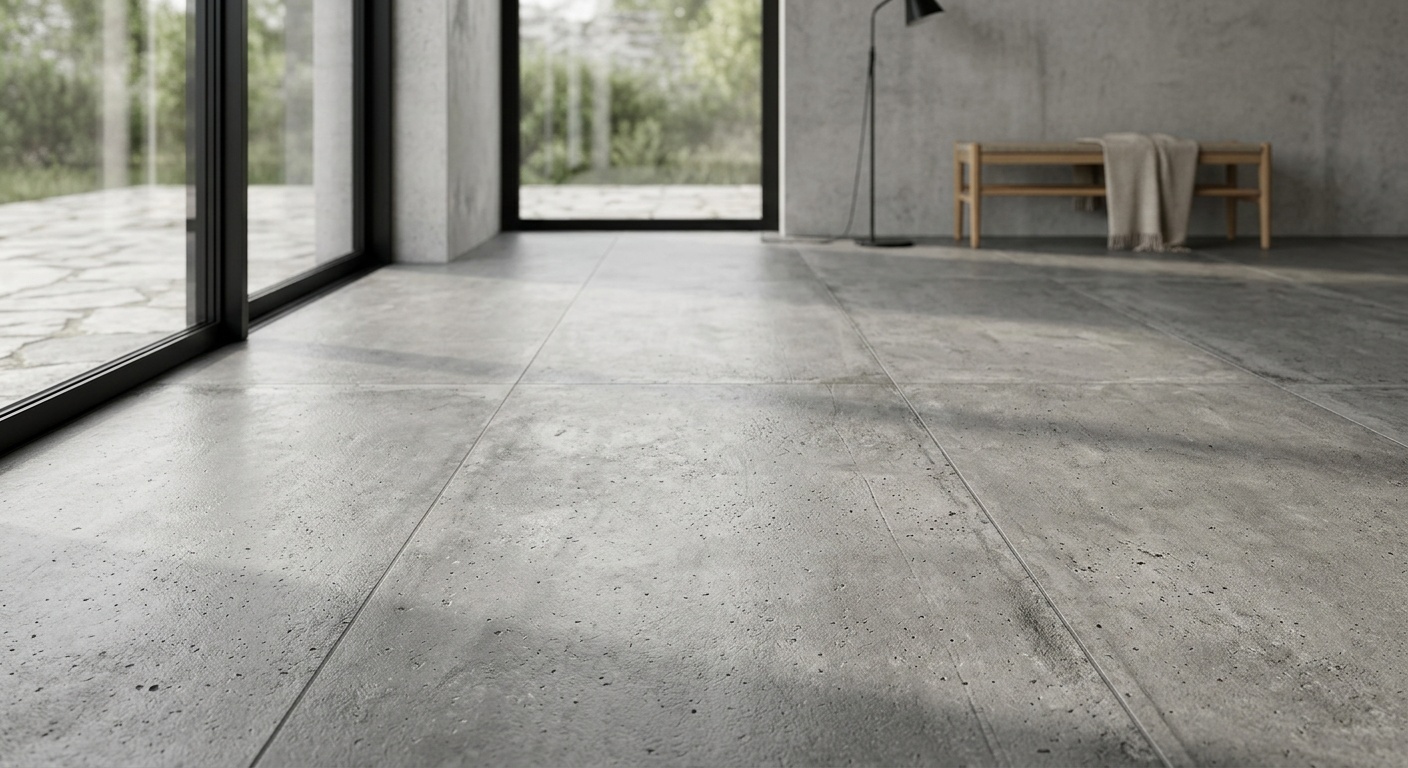
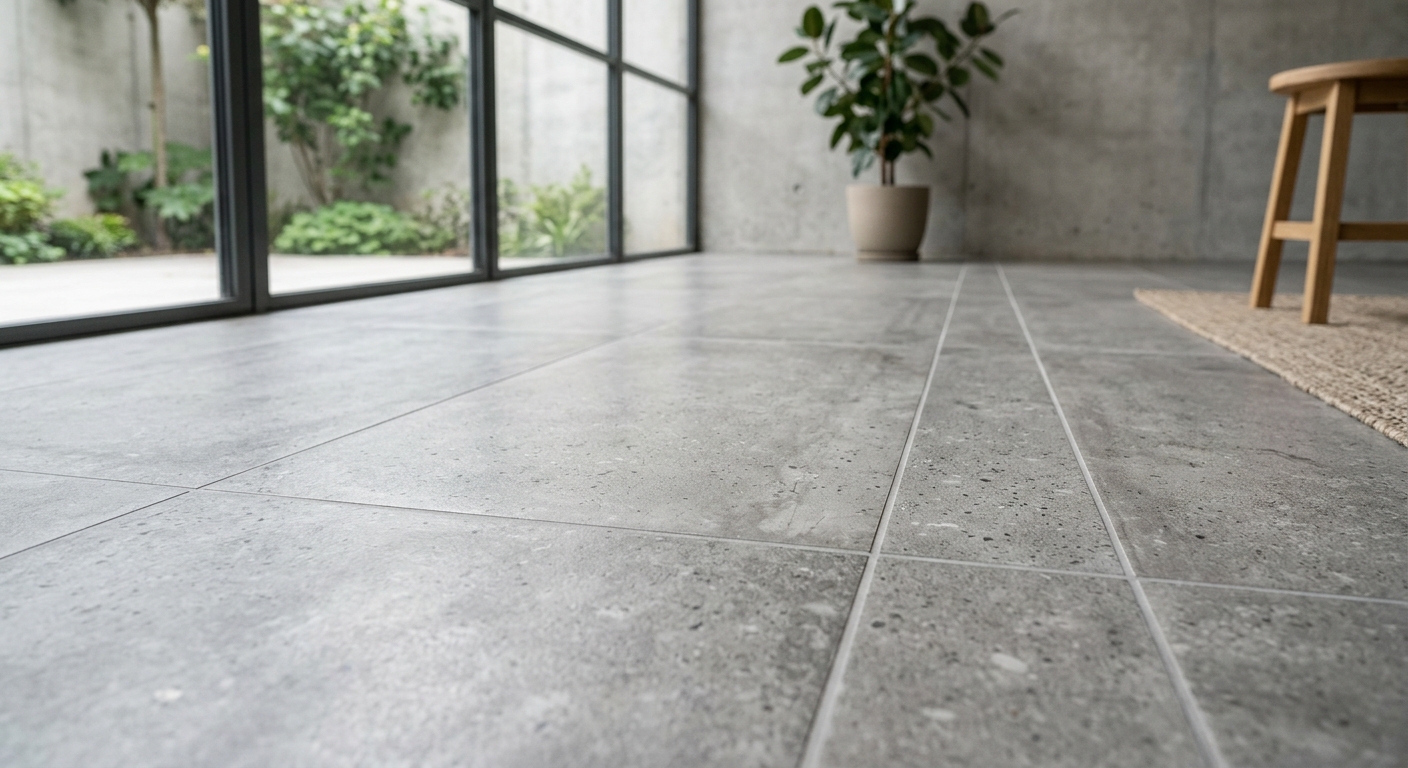
Quick Scenario: Imagine you’ve just purchased a 1990s ranch-style home with a 1,200 sq ft basement featuring raw concrete floors. The slab is structurally sound but visually depressing. A porcelain tile installation in a 24″x24″ concrete-look format could transform that space into a functional living area for approximately $8–$14 per square foot in materials — making it one of the highest-ROI renovations available in 2026.
Step 1 — Assessing Your Concrete Slab
Before you spend a dollar on tile, your slab needs to pass a few critical tests. Skipping this step is the #1 reason tile installations fail.
The Four Slab Assessments You Cannot Skip
1. Flatness Check
The TCNA’s 2026 Handbook for Ceramic, Glass, and Stone Tile Installation specifies that substrates must not deviate more than 1/8 inch in 10 feet for standard tiles, or 1/8 inch in 10 feet measured diagonally for large-format tiles (anything over 15 inches on any side). Use a 10-foot straightedge or a laser level to sweep across your slab. Mark any high or low spots with chalk.
2. Moisture Testing
Concrete breathes. Even slabs poured decades ago can transmit moisture vapor upward, destroying adhesive bonds. Conduct a calcium chloride test (ASTM F1869) or use a relative humidity probe (ASTM F2170). In 2026, the acceptable threshold for most modified thin-set mortars is under 3 lbs/1,000 sq ft/24 hours or below 75% RH. If your slab exceeds this, you’ll need a moisture mitigation membrane before tiling.
3. Crack Analysis
Not all cracks are equal. Hairline cracks (under 1/16″) that are stable can usually be addressed with crack isolation membranes. Active cracks — those still moving due to settling or thermal expansion — require repair before any tile work begins. A simple test: apply a thin bead of caulk across the crack, let it cure, and check in 30 days. If it stretches or tears, the crack is active.
4. Contamination Check
Oil, paint, curing compounds, and sealers will prevent thin-set from bonding. Drip water onto the concrete. If it beads up rather than absorbing, the surface has been treated and requires mechanical grinding or chemical etching before tiling.
Step 2 — Tools and Materials You’ll Need
Pro Tip: Don’t cheap out on tools. A quality notched trowel and a reliable tile saw will save you more in wasted materials than their cost difference from budget alternatives.
Essential Tool List for a Professional-Quality Installation
- Tile wet saw (10″ blade recommended for large-format tiles)
- Angle grinder with diamond blade (for tight cuts and notches)
- 1/2″ x 1/2″ square-notched trowel (for tiles 12″x12″ or larger)
- Margin trowel (for mixing and applying thin-set in corners)
- Rubber mallet
- Large format tile leveling system (clips and wedges — essential for 18″+ tiles)
- Chalk line and tape measure
- Laser level or 10-foot straightedge
- Grout float
- Sponges, buckets, mixing paddle
- Knee pads (trust us on this one)
Materials Checklist
- Porcelain tiles (order 10–15% extra for cuts and waste)
- Modified polymer thin-set mortar (medium-bed formula for large-format tiles)
- Crack isolation membrane (if cracks are present)
- Moisture barrier membrane (if moisture readings are elevated)
- Unsanded or sanded grout (depends on joint width)
- Grout sealer
- Expansion joint caulk matching grout color
- Tile spacers or leveling system clips
Step 3 — Surface Preparation: The Make-or-Break Phase
Here’s a statistic that should get your attention: According to the National Tile Contractors Association (NTCA), approximately 70% of tile installation failures in 2025 were traced back to inadequate surface preparation — not poor materials or bad technique during installation. The slab prep phase is where experienced installers spend the most time, and where DIYers most often cut corners.
Repairing Low Spots and High Points
High spots: Use a concrete grinding wheel or angle grinder with a cup wheel attachment to grind down any ridges or high points. Wear a respirator — concrete dust is a serious health hazard.
Low spots: Fill depressions deeper than 1/8″ with a polymer-modified floor leveling compound. Products like Ardex K-15 or Mapei Ultraplan 1 Plus are favorites among professional installers in 2026. Mix according to manufacturer specs, pour into the low area, and feather the edges with a gauge rake. Most compounds reach walkable strength within 2–4 hours.
Cleaning and Profiling the Surface
Once the slab is flat, it needs mechanical profile — tiny peaks and valleys that give the thin-set something to grip. Use a shot blaster or drum sander for large areas, or an angle grinder with a scarifying wheel for smaller spots. Follow with a thorough vacuum and damp mop. No dust, no oil, no debris — the slab should be the cleanest surface in your house before tile goes down.
If moisture readings were borderline, apply a moisture mitigation epoxy primer like LATICRETE Hydro Ban or Schluter DITRA before your thin-set. These products effectively block vapor transmission and are compatible with virtually all thin-set mortars in 2026.
Step 4 — Layout Planning and Dry-Fitting
A poorly planned layout will haunt you every time you walk across that floor. Tiles cut down to slivers in corners, asymmetrical patterns that make a room look crooked — these are entirely preventable with 30 minutes of planning.
Find the visual center of the room by snapping chalk lines from the midpoint of opposing walls. Where they intersect is your starting point. But here’s the practical twist: dry-lay a row of tiles from that center point to the wall. If you end up with a cut tile smaller than half a tile width at the wall, shift your starting point by half a tile to create more balanced cuts on both ends.
For large rooms (over 400 sq ft) or those with multiple doorways and visual focal points, consider using a diagonal layout or a herringbone pattern — both trending strongly in 2026 interior design. Diagonal layouts require more cuts and waste (budget 15–20% extra tile), but they visually expand smaller spaces and hide slight imperfections in square rooms.
Mark your working lines permanently with chalk and seal them with a clear coat spray before you start mixing mortar — wet thin-set will erase chalk lines before you know it.
Step 5 — Mixing Mortar and Setting the Tile
This is where your installation truly takes shape. Getting the thin-set consistency right is a skill that comes with practice, but we’ll give you the benchmarks to aim for.
Mixing Thin-Set Like a Professional
Use a 1/2″ drill with a paddle mixer and follow the water-to-powder ratio on the bag precisely. Over-watering thin-set is one of the most common DIY mistakes — it reduces bond strength dramatically. Properly mixed thin-set should hold a peak when you pull the paddle out, similar to peanut butter consistency. Let it slake (rest) for 5–10 minutes, then re-mix briefly before use.
For large-format porcelain tiles (18″x18″ and above), use a medium-bed mortar specifically designed for this application. Standard thin-set applied in thick beds can shrink and crack during curing, creating hollow spots under large tiles. Medium-bed mortars like Mapei Granirapid or LATICRETE 254 Platinum are engineered to maintain bond integrity at greater thicknesses.
The Back-Buttering Rule for Porcelain
Porcelain tiles are dense and non-porous — they don’t absorb thin-set moisture the way ceramic does. This means you need to ensure complete coverage. Always back-butter porcelain tiles in addition to combing the floor with a notched trowel. Flat-trowel a thin skim coat onto the back of each tile before setting. This practice helps achieve the TCNA-required 95% coverage for wet areas and 80% for dry areas — with no voids larger than a quarter near corners or edges.
Press each tile firmly into position with a slight twisting motion, then check with a grout float or beating block and rubber mallet. Use your leveling system clips on all four sides of large-format tiles to prevent lippage — that slight height difference between adjacent tiles that causes tripping hazards and looks unprofessional.
Work in manageable sections — don’t spread more thin-set than you can cover in 20–30 minutes. Check the open time on your specific mortar bag; in warmer weather, it decreases significantly.
Step 6 — Grouting and Sealing
Allow the thin-set to cure fully — typically 24–48 hours for most modified mortars, though some rapid-set products reach grouting readiness in as little as 3–4 hours in 2026. Do not walk on the tiles during this period.
Remove all spacers or leveling clips. Mix your grout to a smooth, lump-free consistency. Apply it diagonally across the tile joints with a rubber grout float at a 45-degree angle, packing the joints completely. Work in 50–75 sq ft sections. After 15–20 minutes (check for a slight haze forming), clean excess grout with a damp sponge in a circular motion, being careful not to pull grout out of the joints.
Expansion joints are mandatory at all walls, columns, doorways, and any area exceeding 24 feet in either direction. Fill these joints with caulk matching your grout color — never fill them with grout, which will crack as the slab and tile system undergo normal thermal movement.
After grout has cured for 72 hours, apply a penetrating grout sealer, especially in kitchens, bathrooms, and outdoor applications. In 2026, epoxy-based grouts (like LATICRETE SpectraLOCK) are gaining significant market share precisely because they require no sealing and offer vastly superior stain resistance — worth the higher initial cost for high-traffic or commercial applications.
Common Challenges and How to Overcome Them
Challenge 1: Hollow-Sounding Tiles After Installation
Tap your freshly set tiles with a coin or knuckle. A hollow sound indicates inadequate thin-set coverage underneath. If caught early (within the first few days), these tiles can be carefully removed with a chisel, the area recleaned, and the tiles reset with proper coverage. If the hollow areas are widespread, the installation may need to be fully replaced — which is why back-buttering and working in small sections is so critical from the start. Prevention is always cheaper than repair.
Challenge 2: Tiles Cracking After Installation
Cracks appearing in tiles after installation almost always point to one of three causes: unaddressed movement cracks in the underlying concrete, missing expansion joints, or tiles set over an unstable substrate. Installing a crack isolation membrane like Schluter DITRA or LATICRETE Blue 92 Anti-Fracture Membrane between the slab and tile decouples the tile system from minor slab movement, protecting against the vast majority of crack-related failures.
Challenge 3: Grout Discoloration and Staining
Inconsistent grout mixing, contamination from tile residue, or uneven water absorption during application can all cause grout to cure with visible color variations. In 2026, the best preventive measure is using a pre-mixed, factory-colored epoxy grout rather than traditional cementitious grout. If you’re using cementitious grout and notice variation during application, work faster in smaller sections to keep moisture levels consistent across joints.
Product and Method Comparison Table
Use this comparison to make informed product decisions for your specific project conditions:
| Factor | Standard Thin-Set | Medium-Bed Mortar | Epoxy Adhesive |
|---|---|---|---|
| Best For | Tiles up to 15″x15″ | Large-format 18″+ tiles | Chemical exposure areas |
| Cure Time | 24–48 hours | 24–72 hours | 12–24 hours |
| Cost (per sq ft) | $0.30–$0.60 | $0.55–$0.90 | $1.20–$2.50 |
| Moisture Tolerance | Moderate | Moderate–High | Excellent |
| DIY Friendliness | High | Medium | Low (requires experience) |
Installation Method Success Rate Visualization
Based on 2025 NTCA installer survey data (% of installations still performing well at 5 years):
Frequently Asked Questions
Can I install porcelain tile over a cracked concrete slab without fixing the cracks first?
For hairline cracks (under 1/16″) that show no signs of active movement, you can install a crack isolation membrane such as Schluter DITRA or LATICRETE Blue 92 directly over the crack before tiling. This membrane decouples the tile from minor substrate movement and prevents the crack from telegraphing through. However, for active cracks or cracks wider than 1/8″, you must repair the crack with an appropriate epoxy injection system or polyurethane filler and confirm it has stabilized before proceeding. Tiling over an active crack without treatment almost guarantees a tile or grout failure within one to three years.
Do I need to prime concrete before applying thin-set mortar?
In most standard applications where the concrete is clean, profiled, and moisture-tested within acceptable limits, a dedicated primer is not required before applying modified thin-set. However, in 2026, it’s best practice to apply a diluted acrylic bonding agent or a manufacturer-specified primer in several situations: when the slab is very old and porous, when moisture readings are borderline, when using self-leveling compounds as a skim coat, or when the slab surface shows significant dusting or laitance. Always follow the thin-set manufacturer’s specific substrate preparation recommendations for optimal bond performance.
What size notched trowel should I use for large-format porcelain tiles?
For tiles ranging from 12″x12″ to 18″x18″, a 1/2″ x 1/2″ square-notched trowel is the industry standard. For large-format tiles 24″x24″ and above — which are increasingly popular in 2026 — upgrade to a 3/4″ x 3/4″ square-notch or a U-notch trowel that deposits a greater volume of mortar. These larger tiles require more mortar depth to accommodate any slight warpage in the tile itself (known as “lippage from bow”). Always combine proper trowel selection with back-buttering the tile and using a leveling clip system to achieve the flat, professional result that large-format porcelain demands.
Your Tile Transformation Roadmap: Final Steps
You now have a comprehensive, step-by-step framework for turning a lifeless concrete slab into a porcelain tile installation that could genuinely last half a century. Let’s distill this into your immediate action plan:
- ✅ Week 1 — Assess Before You Invest: Conduct flatness testing, moisture testing, and crack analysis before purchasing a single tile. Your slab’s condition drives every subsequent decision.
- ✅ Week 2 — Prep with Professional Standards: Grind high spots, level low spots, clean the surface, and address any moisture or crack issues with the appropriate membranes or repair products.
- ✅ Week 3 — Plan Your Layout Meticulously: Dry-lay your tiles, snap your working lines, and confirm your cut tile balance before opening a single bag of thin-set.
- ✅ Week 4 — Set, Level, and Cure: Work in small sections, back-butter every tile, use a leveling system for large-format tiles, and respect cure times before grouting.
- ✅ Week 5 — Grout, Seal, and Enjoy: Fill all joints completely, install expansion joint caulk at all perimeter and transitional locations, and seal your grout for long-term protection.
The broader trend is clear: in 2026 and beyond, porcelain tile installations over concrete will only grow in popularity as large-format tiles, improved adhesive systems, and smarter layout tools make the process more accessible to skilled DIYers while raising the ceiling for professional results. By 2027, industry analysts expect thin-set mortar innovations incorporating graphene additives to further extend open times and bond strength — making even ambitious installations more forgiving.
Here’s the question worth sitting with: What would your space look like — and how much more would you use it — if that concrete slab finally became the beautiful, durable floor it always had the potential to be? The investment is modest. The tools are accessible. The knowledge is now in your hands. The only thing left is to begin.
About the Author
