Choosing Outdoor Tile That Handles Freeze-Thaw Cycles: The Complete 2026 Guide
Reading time: 14 minutes
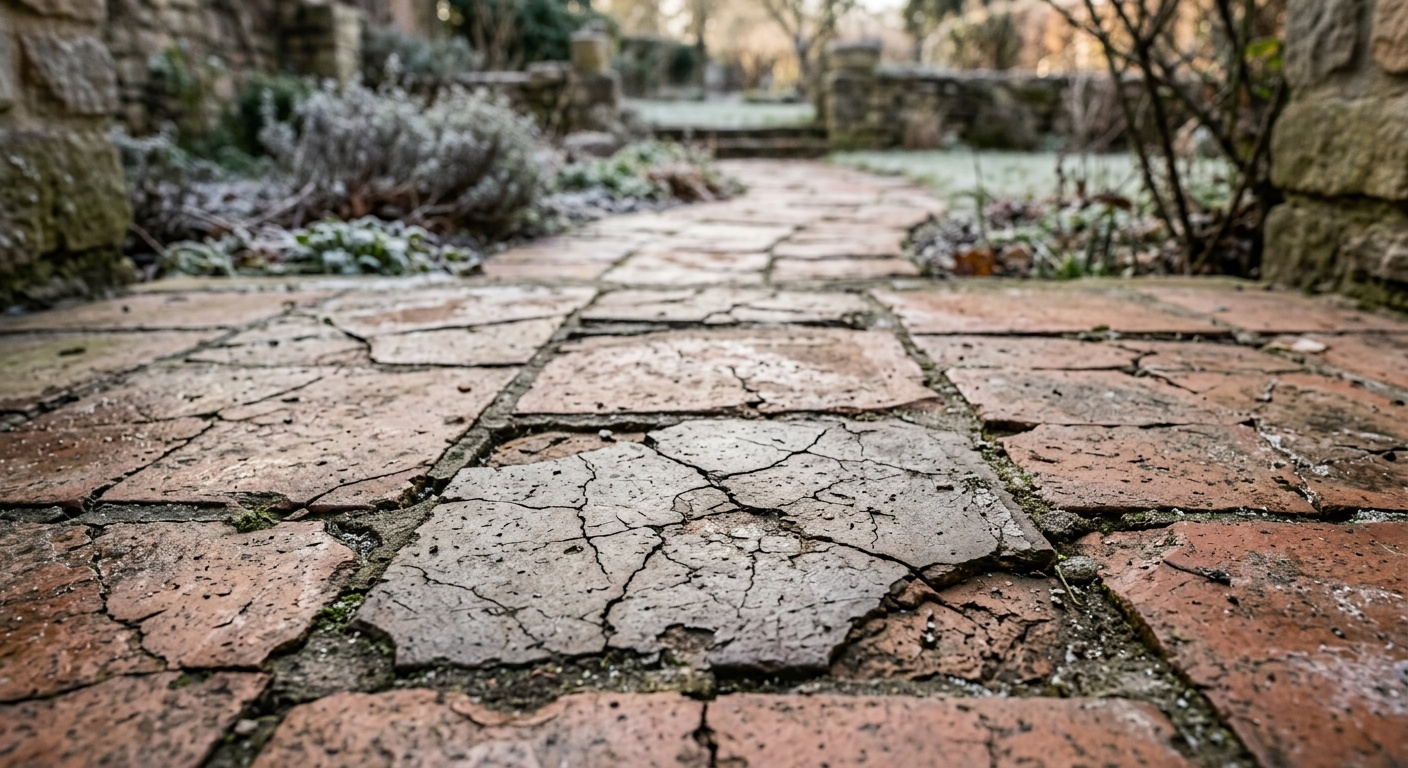
Picture this: You’ve just finished a stunning patio renovation. The tiles look incredible — clean lines, beautiful texture, the perfect complement to your backyard. Then winter hits. By March, you’re staring at cracked, heaved, and spalling tiles that have buckled under months of freeze-thaw punishment. Sound familiar? You’re not alone.
Freeze-thaw damage is one of the leading causes of premature outdoor tile failure in cold climates — and it’s almost entirely preventable with the right material selection. Yet in 2026, thousands of homeowners and contractors still make avoidable mistakes simply because they don’t fully understand how water, temperature, and porosity interact beneath the surface of outdoor tile.
This guide cuts through the confusion. Whether you’re renovating a front walkway, designing a rooftop terrace, or building a pool deck in a climate that sees hard winters, you’ll find the technical knowledge and practical decision-making tools you need to choose tile that actually lasts.
Table of Contents
- Why Freeze-Thaw Cycles Destroy the Wrong Tile
- The Key Metrics That Actually Matter
- Tile Types Compared: What Holds Up and What Doesn’t
- Real-World Case Studies: Lessons From the Field
- Freeze-Thaw Performance at a Glance
- Installation Practices That Make or Break Durability
- Comparative Guide: Tile Types for Cold Climates
- 3 Common Challenges and How to Overcome Them
- FAQs
- Your Freeze-Proof Tile Checklist: Next Steps
Why Freeze-Thaw Cycles Destroy the Wrong Tile
The science is deceptively simple. When water seeps into the pores of a tile — whether through the tile body itself or through micro-cracks in the glaze — and then freezes, it expands by approximately 9% in volume. That expansion exerts enormous pressure on the surrounding material. Repeat this cycle dozens or even hundreds of times across a single winter season, and the cumulative damage becomes catastrophic.
In 2026, the challenge has become more nuanced. Climate volatility means many regions that historically experienced stable winters now face erratic freeze-thaw cycling — temperatures fluctuating above and below freezing repeatedly within the same week. According to the National Tile Contractors Association (NTCA), regions in the Upper Midwest and Great Lakes areas now experience an average of 87 to 110 freeze-thaw cycles per year, up from roughly 60-70 cycles two decades ago. That’s a 30-40% increase in mechanical stress on outdoor surfaces.
The key insight most homeowners miss: it’s not just about whether a tile is “outdoor rated.” It’s about understanding the specific mechanism by which freeze-thaw damage occurs and choosing tile whose physical properties resist that mechanism.
The Three Stages of Freeze-Thaw Tile Damage
Stage 1 — Absorption: Water enters the tile body through surface pores, grout joints, or hairline cracks. Tiles with high water absorption rates are most vulnerable at this stage.
Stage 2 — Expansion Stress: As temperatures drop below 32°F (0°C), absorbed water turns to ice, expanding and pushing outward. The tile body resists — but if absorption was significant, the internal stress exceeds the tile’s tensile strength.
Stage 3 — Spalling and Cracking: Repeated cycles cause surface flaking (spalling), subsurface cracking, and eventually full tile fracture. This process often isn’t visible until significant damage has already accumulated below the surface.
Pro Tip: Don’t wait for visible cracking to diagnose freeze-thaw damage. Tap tiles lightly with a coin in spring — a hollow sound indicates debonding caused by subsurface expansion, even when the surface looks fine.
The Key Metrics That Actually Matter
When shopping for outdoor tile in a freeze-prone climate, two technical specifications matter above all others: water absorption rate and COF (Coefficient of Friction). Understanding these numbers transforms you from a passive consumer into an informed decision-maker.
Water Absorption Rate: The Most Critical Specification
Water absorption is measured as a percentage of the tile’s dry weight that it can absorb when submerged. Industry standards, governed by ASTM C373 testing in the United States, classify tiles into the following categories:
- Impervious: Less than 0.5% absorption — the gold standard for freeze-thaw environments
- Vitreous: 0.5% to 3% absorption — acceptable in mild freeze-thaw climates
- Semi-vitreous: 3% to 7% absorption — risky in climates with more than 50 freeze-thaw cycles per year
- Non-vitreous: More than 7% absorption — avoid entirely for outdoor use in cold climates
The general rule endorsed by the NTCA and the Tile Council of North America (TCNA) in their 2025 updated handbook: any tile used in an exterior application subject to freeze-thaw cycling should have a water absorption rate of 0.5% or less. This is non-negotiable for climates like Chicago, Minneapolis, Denver, or Montreal.
COF: Safety Beyond Durability
While water absorption governs durability, the Coefficient of Friction governs safety. Outdoor tiles in freeze-thaw climates will encounter ice, slush, and wet surfaces regularly. The Americans with Disabilities Act (ADA) recommends a minimum dynamic COF of 0.42 for walking surfaces. Many tile industry professionals now recommend a minimum of 0.60 DCOF for exterior applications, with some high-traffic commercial spaces targeting 0.70 or above.
Look for tiles that carry the ANSI A137.1 certification with explicit DCOF values listed — not vague descriptions like “slip-resistant finish.” Ask your supplier for the actual tested number.
Tile Types Compared: What Holds Up and What Doesn’t
Not all tile materials respond to freeze-thaw stress equally. Here’s a clear-eyed breakdown of the most common outdoor tile categories and their real-world performance in cold climates.
Porcelain Tile: The Clear Leader
Full-body porcelain tile fired at extremely high temperatures (typically above 2,200°F / 1,200°C) achieves water absorption rates well below 0.5% — often as low as 0.1% to 0.3%. This makes it the most reliably freeze-thaw-resistant tile option available in 2026. Major manufacturers including Porcelanosa, Marazzi, and Daltile all offer dedicated exterior porcelain lines explicitly rated for freeze-thaw environments.
In 2025, the global porcelain tile market reached approximately $18.7 billion USD, with exterior-rated porcelain among the fastest-growing subcategories, driven precisely by demand from colder-climate renovation projects. The increased availability and competitive pricing in 2026 means there’s less reason than ever to compromise on this specification.
Best for: Patios, walkways, pool surrounds, steps, rooftop terraces in any freeze-prone climate.
Natural Stone: Beautiful but Demanding
Natural stone — granite, slate, quartzite, and certain sandstones — can perform well in freeze-thaw environments, but performance varies dramatically by stone type and even by quarry source. Granite typically has a very low absorption rate (often below 0.5%), while certain limestones and sandstones can exceed 7%, making them completely unsuitable for cold-climate outdoor use.
Even with freeze-resistant stone, proper sealing is essential and must be maintained annually or biannually. Unlike porcelain, natural stone’s absorption properties can change over time as sealers degrade — a maintenance variable many homeowners underestimate.
Best for: Homeowners willing to commit to annual maintenance schedules; granite and quartzite are the safest choices.
Ceramic Tile: Proceed With Caution
Standard ceramic tile is fired at lower temperatures than porcelain, resulting in absorption rates typically between 3% and 10%. While some floor-grade ceramics are vitreous, many are not — and the variability is significant. In 2026, ceramic still appears frequently in outdoor tile sections at home improvement stores, and consumers often purchase it without realizing it’s inappropriate for freeze-thaw environments.
Best for: Covered outdoor areas in mild climates, or climates that experience fewer than 25 freeze-thaw cycles per year.
Quarry Tile: The Underrated Workhorse
Quarry tile — an unglazed, extruded tile made from natural clay — can achieve surprisingly good freeze-thaw resistance when properly manufactured. Absorption rates vary between 0.5% and 5%, so specification checking is still necessary. Its naturally textured surface often provides excellent COF without additional surface treatments.
Best for: Commercial exteriors, traditional architectural styles, areas where slip resistance is a primary concern.
Real-World Case Studies: Lessons From the Field
Case Study 1: The Minneapolis Rooftop Terrace (2024–2025)
A residential developer in Minneapolis, Minnesota undertook a rooftop terrace project in late 2024, selecting large-format 24″x48″ porcelain pavers with a rated absorption of 0.2% and a DCOF of 0.72. The terrace was installed on a pedestal system with open joints to allow drainage, following TCNA method TR711-19 for elevated exterior tile.
After the brutal 2024-2025 winter — which brought 94 documented freeze-thaw cycles — the terrace emerged without a single cracked or debonded tile. The developer reported the project as a benchmark for future high-rise terrace work in the region. Critical success factors: correct tile specification, pedestal drainage system preventing water pooling, and uncoupling membrane beneath the tile layer.
Case Study 2: The Denver Patio That Failed — and What Went Wrong
Contrast that with a Denver homeowner who installed glazed ceramic tile on an open patio in the spring of 2023, choosing tiles based on appearance rather than technical specification. The tile, sourced from a discount retailer, had an absorption rate of approximately 6.5% — well above the recommended threshold for Denver’s climate, which experiences 65-80 freeze-thaw cycles annually.
By spring 2024, roughly 35% of the tiles had cracked, and several had completely sheared along frost lines. The total replacement cost, including labor and materials, exceeded $8,400 — more than twice the original installation cost. The homeowner ultimately reinstalled with frost-rated porcelain pavers, a project that has now survived two full winters without incident.
The lesson here is hard-won but universal: the tile that costs 40% less upfront can cost 200% more over a five-year period in freeze-thaw climates. Value engineering on tile specification is almost never actually valuable.
Freeze-Thaw Performance at a Glance
The chart below compares the relative freeze-thaw resistance of common outdoor tile types based on average water absorption rates and field performance data compiled from NTCA reports and manufacturer testing in 2025-2026.
Freeze-Thaw Resistance Score by Tile Type (Scale: 0–100)
Source: Composite scoring from NTCA field reports, TCNA 2025 Handbook data, and manufacturer freeze-thaw cycle testing. Scores reflect performance in climates with 60+ cycles/year.
Installation Practices That Make or Break Durability
Even the best-rated tile will fail prematurely if installation fundamentals are ignored. In freeze-thaw environments, installation method is as important as material selection — arguably more so. Here are the practices that separate lasting installations from expensive failures.
Mortar Selection: Don’t Compromise Here
Standard Type I Portland cement mortars are not suitable for exterior tile in freeze-thaw climates. You need a polymer-modified mortar (typically designated as ANSI A118.4 or A118.15) that maintains flexibility through thermal expansion and contraction cycles. The polymer component prevents the bond layer from becoming brittle — a crucial property when the substrate and tile may expand and contract at different rates.
In large-format tile applications (tiles larger than 15″x15″), many installers in 2026 are also specifying medium-bed mortars (ANSI A118.15 with enhanced non-sag properties) to ensure full coverage across the tile back — a critical factor since voids beneath large-format tiles can accumulate water and become freeze-thaw failure points.
Movement Joints: The Most Overlooked Element
Rigid tile installed on a rigid substrate with no accommodation for movement is an installation waiting to fail — especially outdoors. The TCNA recommends exterior movement joints every 8 to 10 feet in each direction, at all changes of plane, at perimeter edges, and wherever the tile meets other materials.
These joints must be filled with a ASTM C920 compliant sealant — not grout. Grout is rigid and will crack. Sealant maintains flexibility, absorbing the thermal movement that would otherwise translate into tile cracking or debonding.
Substrate Preparation: The Foundation of Everything
Outdoor tile in freeze-thaw climates must be installed on a substrate that can shed water. A minimum 1/4″ per foot slope toward drainage is essential. Many failed installations in cold climates trace back to flat or incorrectly sloped substrates that allow water to pool beneath or around tile, amplifying freeze-thaw damage.
For concrete substrates, check for existing cracks. Any substrate cracks should be treated with an anti-fracture or uncoupling membrane before tile installation — cracks in the substrate will telegraph through to tile within 1-2 freeze-thaw seasons without this protection.
Comparative Guide: Tile Types for Cold Climates
| Tile Type | Avg. Absorption Rate | Freeze-Thaw Rating | Maintenance Level | Relative Cost (per sq ft) |
|---|---|---|---|---|
| Full-Body Porcelain | 0.1% – 0.3% | Excellent ✅ | Low | $3.50 – $12.00 |
| Granite (Natural) | 0.2% – 0.6% | Good ✅ | Medium | $6.00 – $18.00 |
| Quartzite (Natural) | 0.4% – 1.2% | Good–Moderate ⚠️ | Medium | $8.00 – $22.00 |
| Dense Quarry Tile | 0.5% – 3.0% | Moderate ⚠️ | Low–Medium | $2.50 – $6.00 |
| Glazed Ceramic | 3% – 10%+ | Poor ❌ | High (fails faster) | $1.50 – $5.00 |
3 Common Challenges and How to Overcome Them
Challenge 1: Finding Tiles That Are Both Frost-Rated AND Slip-Resistant
Many highly dense, low-absorption tiles achieve their imperviousness through extremely smooth, vitrified surfaces — which can be dangerously slippery when wet or icy. The temptation is to choose a heavily textured, high-COF tile and assume that higher porosity is an acceptable tradeoff.
Solution: Look specifically for porcelain tiles with a structured or matte finish that achieves both low absorption and high COF. Products in 2026 from manufacturers like Florim, Rex, and Ragno now offer large-format “anti-slip exterior” ranges that achieve COF values above 0.70 while maintaining absorption rates below 0.3%. These products cost 10-20% more than standard porcelain but solve the problem completely without compromise.
Challenge 2: Large Format Tile Installation on Outdoor Substrates
The trend toward large-format tile (24″x24″ and larger) continues strongly in 2026 — and for good reason aesthetically. However, large-format tiles amplify every substrate imperfection and require more precise mortar coverage to prevent hollow spots that accumulate water.
Solution: Use the back-butter method (applying mortar to both the substrate and the tile back) with a large-notch trowel to ensure 95%+ contact coverage. For tiles 24″ or larger in exterior freeze-thaw environments, the TCNA recommends 95% minimum mortar contact — compared to the 80% standard for interior applications. A laser level and experienced installer are non-negotiable for large-format exterior work in cold climates.
Challenge 3: Grout Failure in Freeze-Thaw Environments
Standard Portland cement grout — even sanded grout used in wider joints — is rigid and porous. In outdoor freeze-thaw environments, grout joints fail before tiles do in many installations, leading to water infiltration that then damages the tile assembly from beneath.
Solution: Specify epoxy grout or a high-performance urethane grout (such as LATICRETE PERMACOLOR Select or Mapei Ultracolor Plus FA) for all exterior tile joints in freeze-thaw climates. These products achieve near-zero water absorption in the grout joint itself, cutting off the primary water infiltration pathway. Yes, they cost more and are slightly harder to apply — but grout joint failure is one of the most common and preventable causes of premature outdoor tile assembly deterioration.
Frequently Asked Questions
Can I use any tile labeled “outdoor” or “exterior” in a freeze-thaw climate?
Not necessarily. “Outdoor” or “exterior” labeling indicates a tile is generally suitable for outdoor environments — moisture, UV exposure, temperature changes — but it doesn’t automatically certify freeze-thaw performance. Always verify the specific water absorption rate (look for ≤0.5%) and check whether the manufacturer explicitly lists freeze-thaw resistance testing results, typically conducted under ASTM C1026 (Resistance of Ceramic Tile to Freeze-Thaw Cycling). Ask your supplier or manufacturer for the actual test data, not just marketing language.
Does sealing a tile improve its freeze-thaw resistance enough to use a less suitable tile type?
Sealing can reduce surface water absorption, but it is not a reliable substitute for inherently low-porosity tile in true freeze-thaw climates. Sealers degrade over time — often within 1-3 years under UV exposure and freeze-thaw stress — and re-application requires diligent maintenance. If water penetrates a compromised sealer on a semi-vitreous tile, the underlying material is fully vulnerable. Think of sealing as an additional protective layer for already appropriate tile, not a correction for inappropriate tile selection.
How do I identify if my existing outdoor tile is experiencing freeze-thaw damage before it becomes visually obvious?
The coin-tap test is your best non-destructive diagnostic tool: tap each tile firmly with a coin or key and listen for a hollow, drum-like sound versus a solid, dense sound. Hollow tiles have debonded from the mortar bed — often caused by freeze-thaw expansion — even when the surface appears intact. Also look for hairline cracks at tile corners (a classic freeze-thaw signature), slight lippage changes compared to original installation, and grout joint cracking or powdering. If you find hollow tiles or corner cracks in spring, address them promptly before the next freeze season — partially debonded tiles almost always fail completely within one additional winter.
Your Freeze-Proof Tile Checklist: Next Steps
You’ve navigated the science, the materials, the installation principles, and the real-world cases. Now let’s translate that knowledge into action. Here’s your practical implementation checklist for choosing and installing outdoor tile that survives whatever your climate delivers:
- ✅ Verify absorption rate first, aesthetics second. Confirm that any tile you’re considering has a documented water absorption rate ≤0.5% per ASTM C373 testing before falling in love with the color or pattern.
- ✅ Demand DCOF values in writing. For any exterior tile in a slip-risk environment, request the tested DCOF value and ensure it meets or exceeds 0.60.
- ✅ Specify polymer-modified mortar. Ensure your installer is using an ANSI A118.4 or A118.15 mortar, not standard thinset or Type S mortar.
- ✅ Plan movement joints from the design stage. Don’t let movement joints be an afterthought — they must be designed in, not improvised during installation.
- ✅ Choose epoxy or premium urethane grout for all exterior joints. Don’t compromise on the grout after investing in quality tile.
- ✅ Inspect annually every spring. Use the coin-tap test across your entire tiled surface to catch debonding early, before it cascades into full tile failure.
As climate variability continues to reshape winter conditions across North America and Europe — making freeze-thaw cycles more unpredictable and frequent — the stakes of getting outdoor tile selection right are only increasing. The good news: the tile industry in 2026 has never offered more high-performance, freeze-resistant options at accessible price points. The tools to make the right choice are genuinely within reach.
Here’s the question worth sitting with as you finalize your project: Are you choosing your outdoor tile based on what looks best in the showroom, or based on what will still look great after a decade of winters? The answer to that question is the difference between a patio you’re proud of and a patio you have to rebuild.
About the Author
